CannDetection
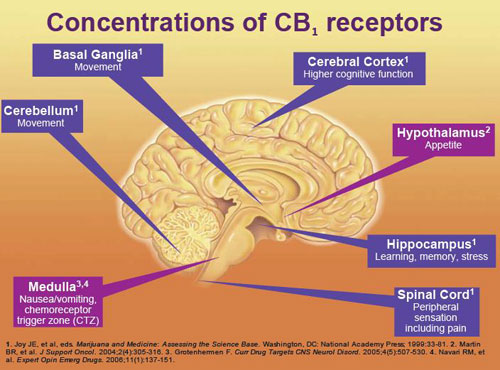
The Human brain has a sophisticated endocannabinoid neural network signaling system that is involved in motor neuron control and cognitive thinking tied to the motor neuron control of bodily muscle groups and organs. The Cannabinoid Receptor 1 (CB1) is a glycoprotein intramembrane receptor that can bind with cannabinoids to affect the neural analog electrical signaling in the brain's circuitry. It is here where the work of psychoactive cannabanoids can impair the human brain's cognitive and motor functions.
Distribution of CB1 Receptors in the Human Brain
Here at the finite neural junctions of the human brain's analog network are synaptic junctions where the electrical gradients of ionized Calcium (2+), Potassium (1+), and Chlorine (-1) are involved in creating electrical voltage potentials that send signaling across the regions of the brain. This electrical signaling is easily modulated through the binding of psychoactive cannabinoids with the CB1 Receptor at the neural pre/post synaptic junctions. THC is transposable with 2-AG relative to the images displayed here.
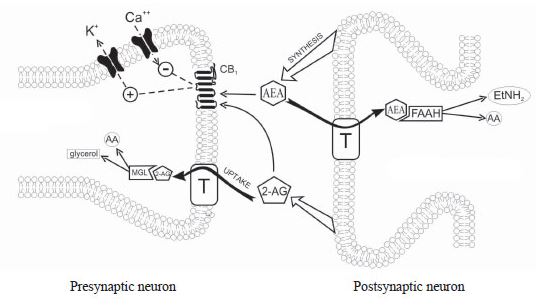
The electrical property of the natural or synthetic cannabinoid is such that it can modulate the neural electro potential to be increased or decreased based on the cannabinoid's chiral molecular center binding structure's affinity for the CB1 Receptor. This has the capacity to excite or inhibit the electro potential gradients of the brain's analog network circuitry.
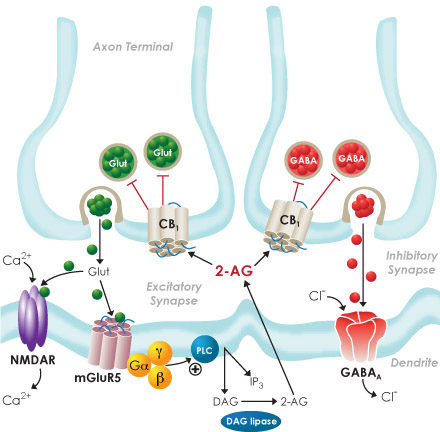
That is 100% measurable as a function of human neural toxicity in the presence of other neural impacting molecules that are capable of traversing the human blood brain barrier. Ethanol and other narcotics may have a throttling affect on the electro potential gradient which is also detectable.
Now, we put that technology into a device about the size of a marker and put it in a human's hand with the capacity to measure human brain impairment by cannabinoid molecules from the 1+ ng/ml range on up in real-time. We add some complex semiconductor EPROM microprocessing of data for analytics and we CannDetect human impairment, the type of cannabanoid(s) impairing the human's brain, and the concentration of actively non-Oxidized psychoactive cannabinoids in a human body.

We leverage the solid state computing platform Raspberry Pi v3 with a quad core ARM Cortex-A53 CPU on Linux with X11 graphics in conjunction with proprietary electronic DC voltage sampling with the ability to sample our neural circuit chip with the CB1 receptor up to 1,000,000 times a second. The 7 inch touch screen tablet is shown here. Our design is as simple as pressing one button after adding the saliva or blood sample to the autosampler. The RPI platform is powerful and allows us to network data wirelessly to remote systems. Data output in terms of the graphical representation or raw ASCII data points sampled in time are available. The image below demonstrates the raw ASCII data output from collection in a LINUX shell (left). That data can be sent downstream to a laptop in a squad car or a database for storage relative to a specific test.
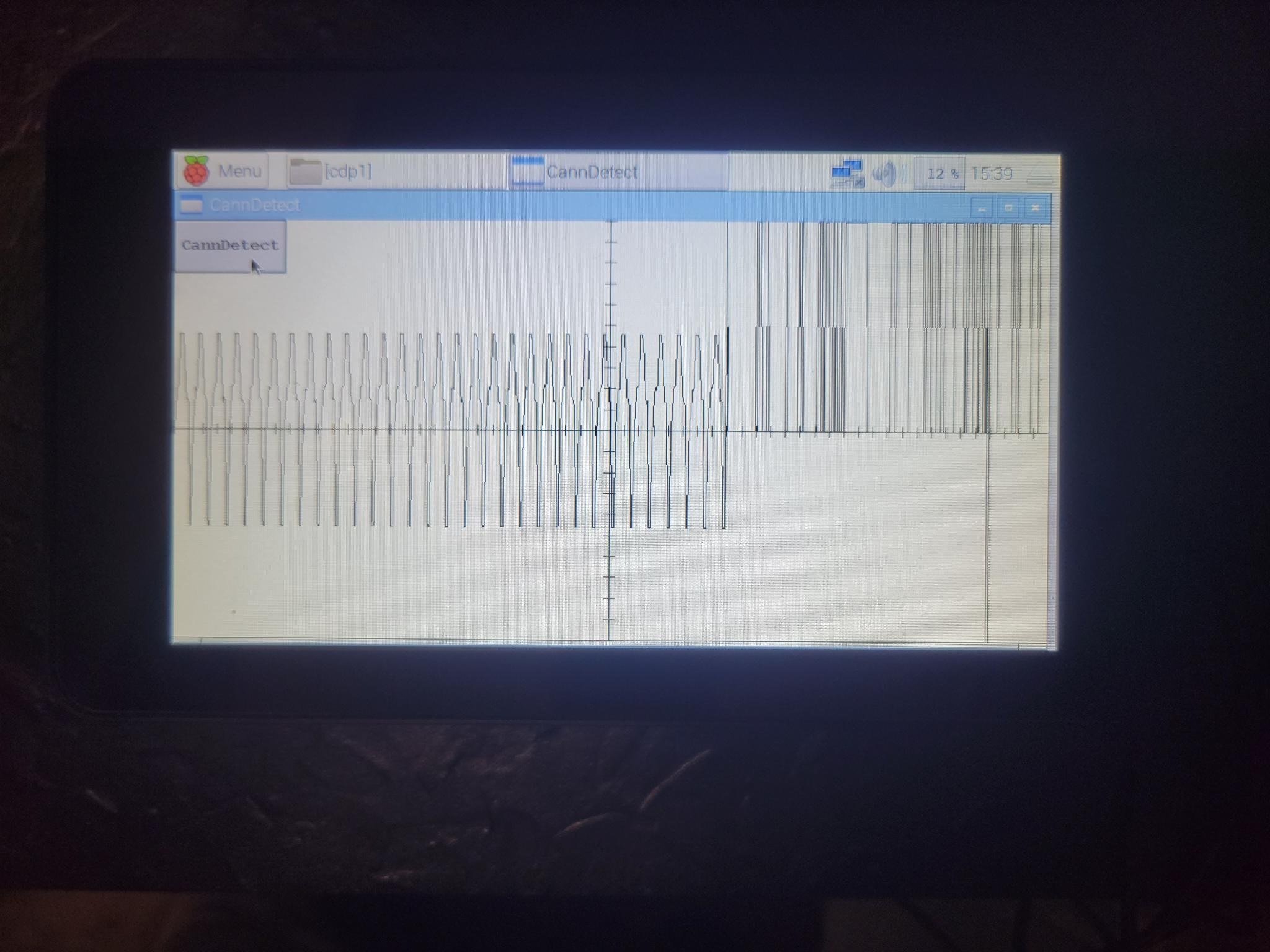
The graphical representation shown is a differential of the DC voltage across a neural circuit. This differential is standardized with THC standards and a GMP manufacturing protocol. The presence of any cannabinoid that binds the CB1 receptor will invoke a differential to the normal circuit DC voltage that is a function of CB1 toxicity relative to the calibration of the instrument. This device is not intended to diagnose a health condition. We may pursue FDA 510k certification in the future. This is an Analytical Chemistry device used to quantify the presence of a CB1 binding cannabinoid relative to known and published cannabinoid binding constants (Ki). The Ki of THC relative to the Human CB1 receptor is well known and published in the Scientific literature, and is a function of the Human neural electrochemistry of the brain's neural circuitry. Patent # US 9,817,007
Please contact us relative to pricing and availability.